Deep Time

A discovery in the Fortuny archives inspires a transformative journey for the fabled Venetian House

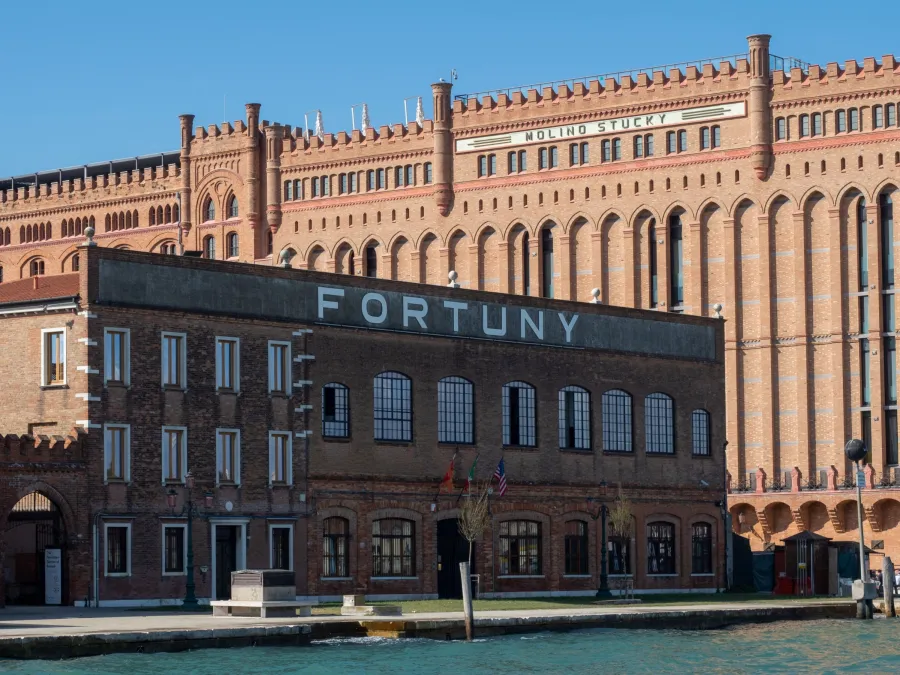
Above Image: The Polpo collection in progress at the Fortuny factory on Guidecca in Venice. 

By Maile Pingel

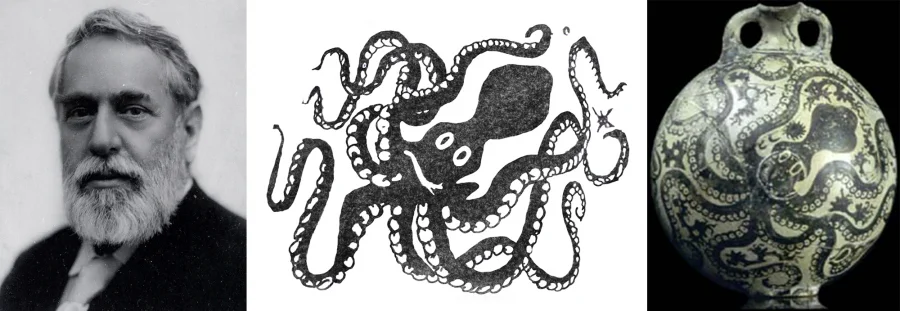
The octopus has captured human imagination for millennia, from Aristotle’s 4th century BC writings to 17th-century Nordic folktales. The cephalopod has now found itself at the heart of Venetian fabric house Fortuny’s latest fabric collection, Polpo. In the early years of the 20th century, Mariano Fortuny (1871-1949), founder of the now century-old textile house, drew an image of an octopus he had seen on a Minoan vessel. And while he did print tests of the design, it never went into production. Its recent rediscovery sparked an exploration of how the fabled luxury brand could reinterpret the octopus in a way that melded myth, nature, and tradition through a modern Venetian lens.

Fortuny founder, and polymathic designer, Mariano Fortuny, and his octopus illustration. The style of Fortuny’s octopus “aligns closely with well-known examples of Minoan marine pottery,” says Riad. The Minoan octopus vase, dating to 1,500 BC, and discovered in Palaikaastro, Greece, is one of the most iconic pieces of “Marine Style” pottery.  

The drawing was rediscovered within Fortuny’s materials during a review of historical sketches and research documents preserved in the company archives. “We discovered and fell in love with Fortuny’s print of an octopus,” says Mickey Riad, the company’s creative director. “During our research process, we later encountered a remarkably similar octopus depicted on a Minoan ceramic vessel. This made perfect sense, given Mariano’s love of ancient Greece and Minoan art as inspiration for his work.”

Riad became fascinated by Mariano’s drawings and quickly saw that an octopod’s mysterious qualities (its ability to transform itself in color, shape, and texture) could lend itself to fabrics. At their factory on the island of Giudecca, the company developed a technical means of producing particular tonal expressions: palettes of rich earthy hues “migrate, merge, and accumulate” to astonishing atmospheric effect. “We maintain an ongoing dialogue with Mariano by embracing the research, development, and experimentation that defined his scientific artistry,“ says Riad.” These techniques have been ideas for a long time, but we finally experimented and pushed our machines to color our fabrics in ways that hadn’t been done before. It was a breakthrough.”

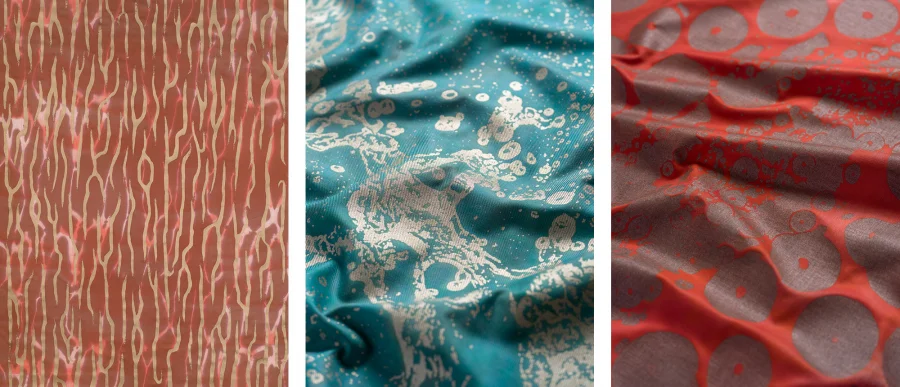
The collection is built on three Venetian-inspired foundations: One resembling the timeworn facades of palazzi; one an abstraction of the Lagoon’s waters; and one with rhythmic transitions that shift, cloud-like, with changing light.  Adding to the collection are six printed patterns that are meditations on movement: Amarysso glimmers like sunlit water; Pitsilo is a speckled sea-spray pattern; Ventose, a play on suction cups; Eledone suggests the camouflage aspects of an octopus’s skin; Neritha is an ode to the tides; and Rhea’s wavelike forms recall Minoan motifs.  “Ventose and Eledone are deeply inspired by the physical characteristics of the octopus, yet they subtly echo elements of Venetian architecture—rui glass [circular, blown-glass windowpanes] and the organic shapes in terrazzo floors,” says Riad.

“Every design in the collection takes me to moments, memories, and promises of Venice,” says Pamela Babey, co-founder and designer emeritus of BAMO, who has had a passionate lifelong affair with Fortuny and La Serenissima.  She shares that her favorites include “the moody Laguna Cloud and Moonlit Ocean. “I can see the sun rising over the water in a foggy morning; the darker tones feel like a supremely late, quiet night along the canal.”

“I can see the sun rising over the water in a foggy morning; the darker tones feel like a supremely late, quiet night along the canal.”

– Pamela Babey

The collection also epitomizes Fortuny’s foundational belief that textiles are living materials shaped by time and use. “Our fabrics become more beautiful as they move with you through life,” he says, noting how metallic pigments softly patina over time. “We have many stories of families who have inherited Fortuny textiles, and we take great pride in that continuity. This is not fast fashion, nor is it seasonal. It is timeless.”

The Fortuny collections are available through Sloan Miyasato.

Monet and Venice

de Young Museum

March 21 – July 26, 2026

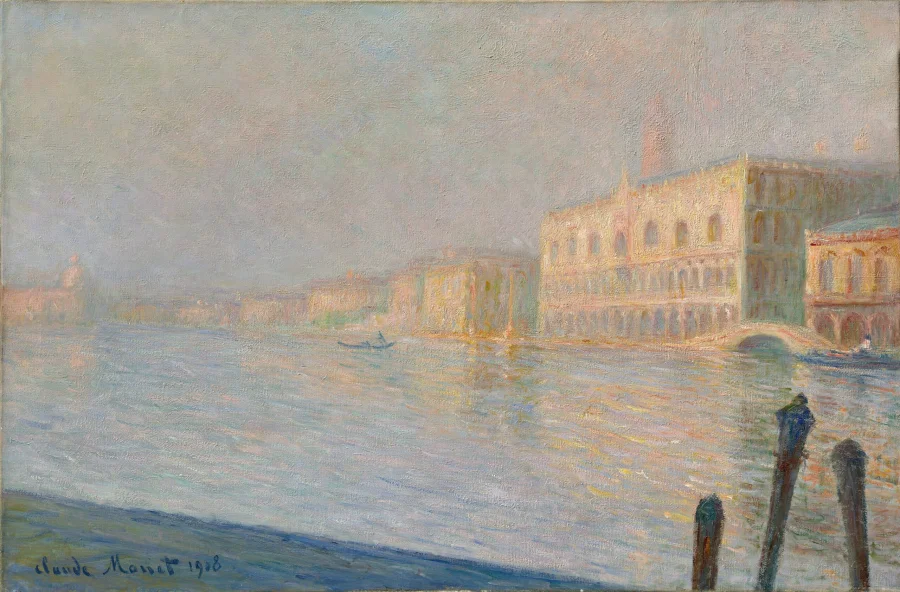
Experience the city of Fortuny’s inspiration through the eyes of Monet: Opening March 21, 2026 at the de Young Museum, Monet and Venice presents more than twenty of the artist’s works from this oeuvre—their first exhibition since their debut in Paris a century ago. “Although Monet visited Venice only once, his paintings of the city are among his most dazzling,” says Thomas P. Campbell, director and CEO of the Fine Arts Museums. “Unlike bustling scenes painted by other artists, Monet’s Venice is hauntingly deserted, with its architecture, buildings, and canals dissolving in an atmospheric light.” Monet’s work is also contextualized with that of other artists who painted in Venice, including Canaletto, John Singer Sargent, J. M. W. Turner, and James McNeill Whistler.

famsf.org

Two Henry Adams Street, Suite 2M-33
San Francisco, CA 94103

© 2022 SAN FRANCISCO DESIGN CENTER  |  TERMS + CONDITIONS  |  PRIVACY POLICY