Haute Approach

Raffaele Fabrizio, co-owner and creative director of Dedar, talks with Maile Pingel about his artful new introductions to the the Versi Liberi collection: luxury textiles delivered with prêt-à-porter ease

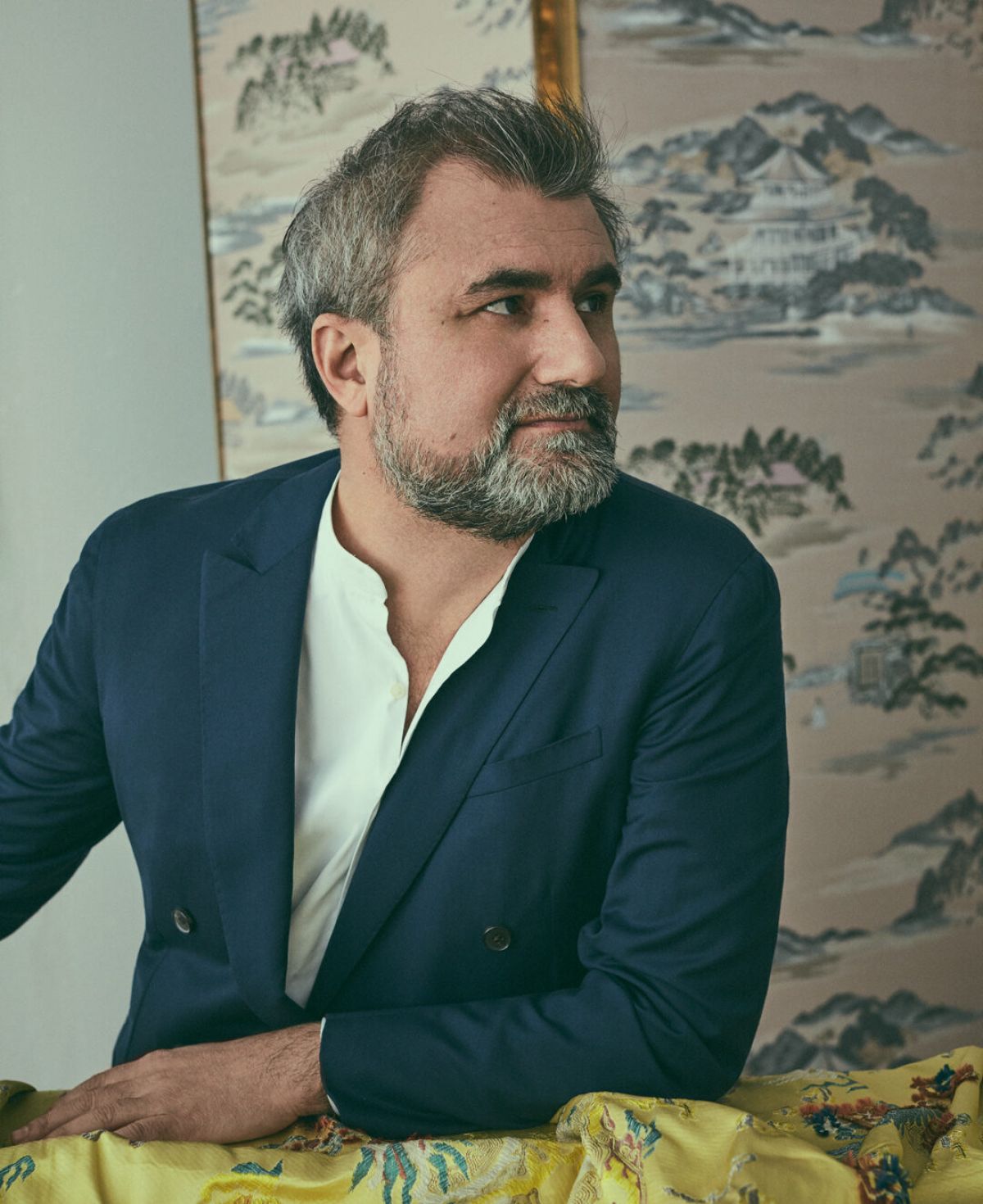
Above Image: Dedar Co-owner and Creative Director Raffaele Fabrizio

By Maile Pingel


“l have always been fascinated by that tradition and by the idea of translating it for today,”says Raffaele Fabrizio, co-owner and creative director of Dedar, the fabric company founded by his parents near Como, Italy, in 1976. “There was interest in our first Versi Liberi collection, and I felt there was more to explore within the idea of combining the uniqueness of made-to-order with the immediacy of ready-made.”
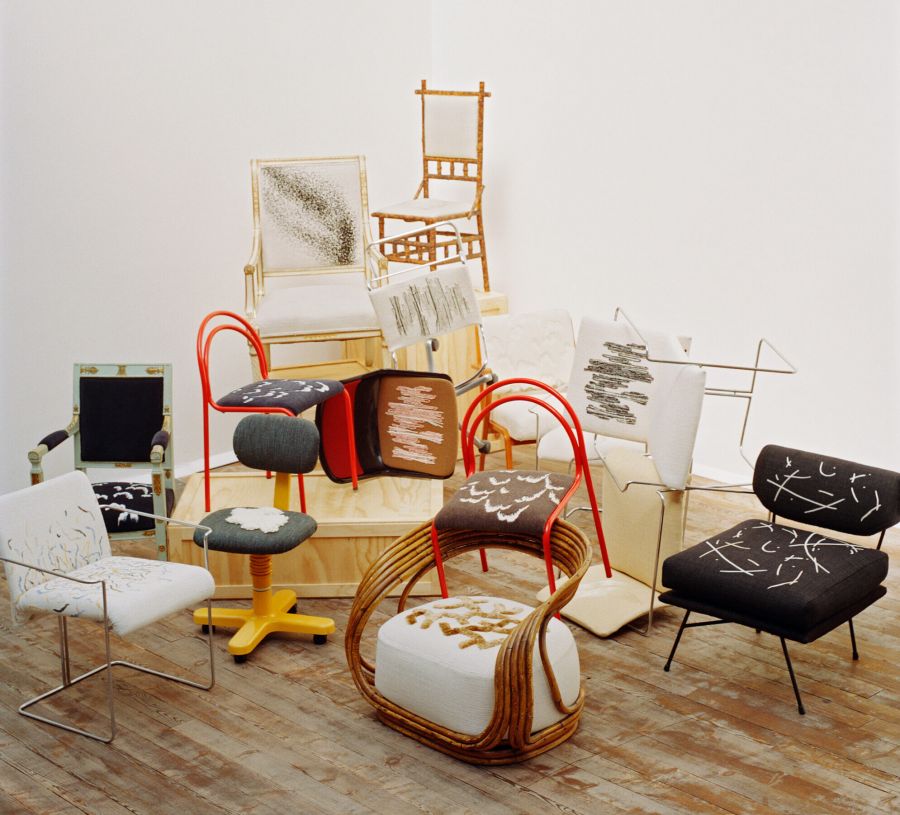
The original collection, which launched in 2025, was comprised of embroidered panels designed for chair seats, backrests, and pillows. The concept was rooted in the historical tradition of placed motifs, which used a single decorative element to define a particular furnishing, like a cushion or a mantlepiece, while simultaneously creating a narrative. (A motif such as a musical instrument might denote a family’s artistic virtues, for example.)

Strokes of genius from the conceptual new additions to the Versi Liberi collection

“In 16th-, 17th-, and 18th-century buildings, there are so many examples of patterns designed specifically for the shape of a piece,” adds Fabrizio, who studied architecture at the Politecnico di Milano. 

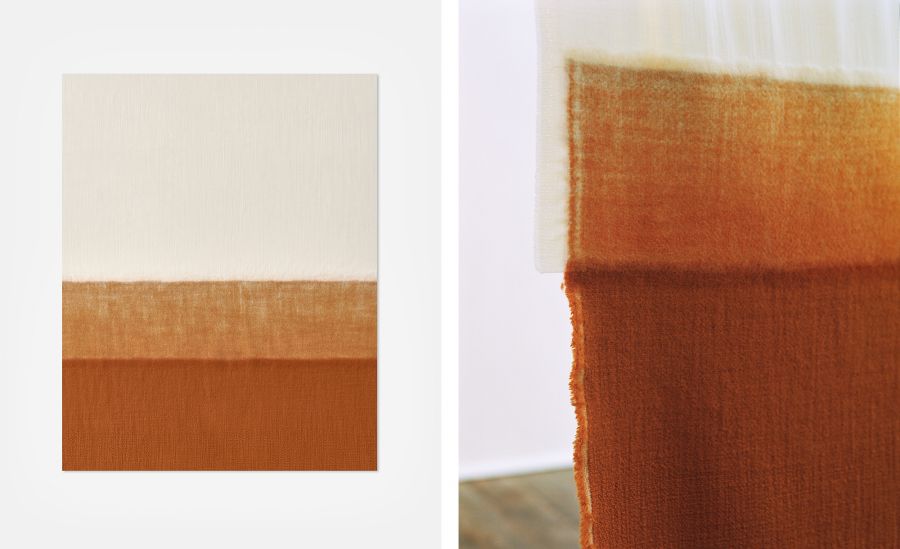
For his latest designs, Fabrizio developed the collection in two directions. First, he has introduced three new panels (Hillevi, Danae, and Melusine, each measuring roughly 68 x 70 centimeters) with “placed” designs that range from ethereal to abstract and that come in new color and material combinations, including velvet and woven felt. Second, he has addressed size with the addition of large-scale drapery panels (about 140 x 370 centimeters) that combine two Dedar fabrics for a Rothko-like swath of color. “The panels explore what the Versi Liberi idea can become when it moves from furniture to the architecture of a space,” explains Fabrizio, who helms the company with his sister, Caterina. “And by revisiting the idea of flounce fabrics, we bring them decisively into the contemporary context.”

“The panels explore what the Versi Liberi idea can become when it moves from furniture to the architecture of a space”

VLL1, a satin and wool canvas weave

In choosing the name Versi Liberi, or free verse, which alludes to contemporary poetry’s eschewing of formal rules, Fabrizio has also underscored the collection’s unique nature. “It’s about the freedom from being by-the-meter, which is what we normally do,” he explains. “The designer who chooses this collection wants to play, to experiment.” Which was just what Fabrizio did. “I wanted to reconcile past and present, to show that a modern pattern can work beautifully on an 18th-century chair just as easily as on a contemporary one.”

HILLEVI

Hillevi consists of over 60,000-point rentré stitches worked on a velvet ground, “representing an evolution of the placed motif and of the expressive possibilities of embroidery,” says Fabrizio. “The design has a pictorial quality, with curving forms and subtle shifts in color and light. I also find the orientation interesting: the design can be positioned in different directions, allowing it to adapt to the character and proportions of the piece it is applied to.”

DANAE

The Chagallesque Surrealism of Danae features embroidered golden wings that give the illusion of taking flight. The pattern is crafted with over 40,000 stitches of metallic thread, set off against a textural ground, and sewn in a way that creates areas of overlap for three-dimensionality and more thinly worked areas that subtly reveal the fabric’s irregular surface.

MELUSINE
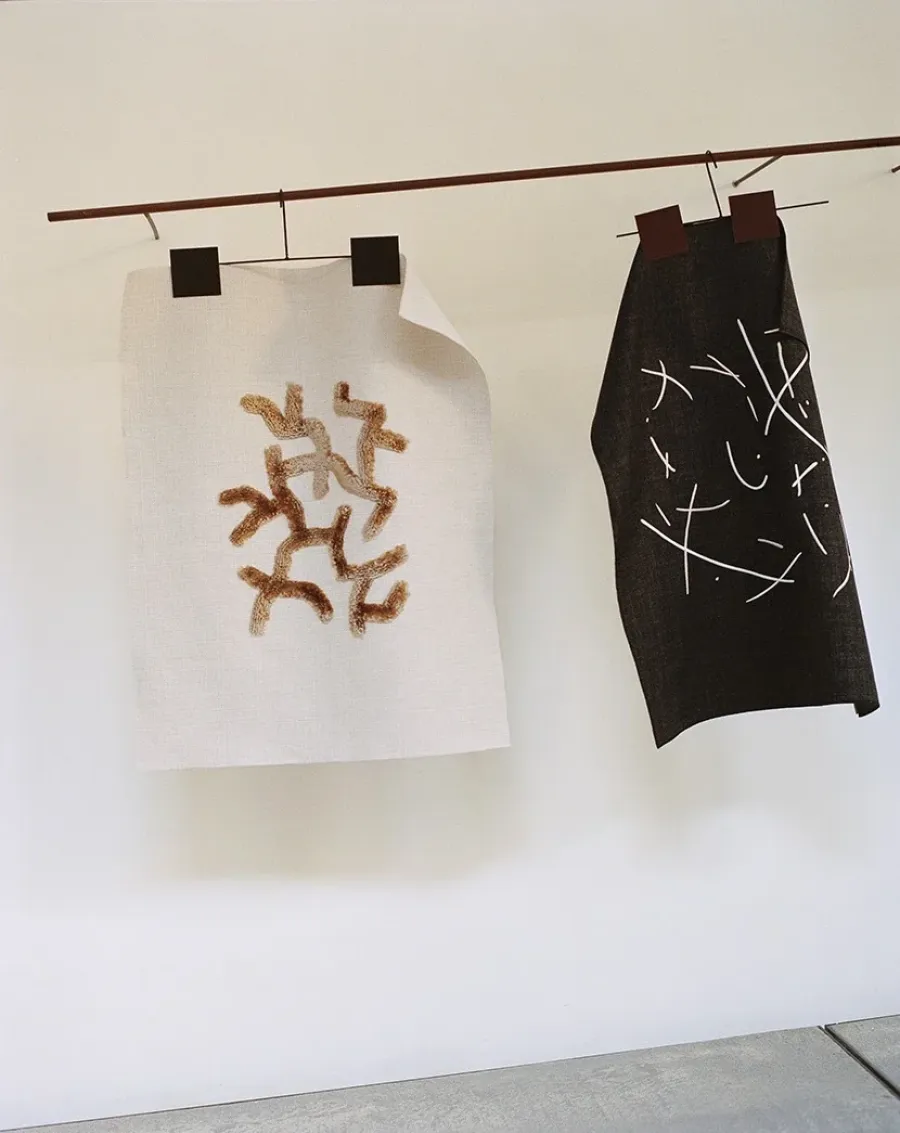
Melusine is an abstraction of dancing figural forms. Their woven bodies evoke New York street art and the work of Keith Haring. The motif melds mechanical precision with artistic sensitivity, requiring time, dedication, and attention.

VLL1

“By combining a satin and a texture, two fabrics with very different identities, we created a single composition in which color, surface and material become inseparable,” says Fabrizio of the VLL1 drapery panel. “The contrast between the fabrics is an essential part of its character: rather than hiding the transition, we make it the central gesture of the design. Designers can decide where to position the ‘horizon line’, whether to flip panels upside down, align them or shift them. This gives great freedom in installation. The panel becomes a way of playing with proportion and light: it breaks the regularity of the curtain, introducing an unexpected, more expressive gesture to the way the window is framed.”

Versi Liberi and the Dedar collections are available through Kneedler Fauchère.
Two Henry Adams Street, Suite 2M-33
San Francisco, CA 94103

© 2022 SAN FRANCISCO DESIGN CENTER  |  TERMS + CONDITIONS  |  PRIVACY POLICY