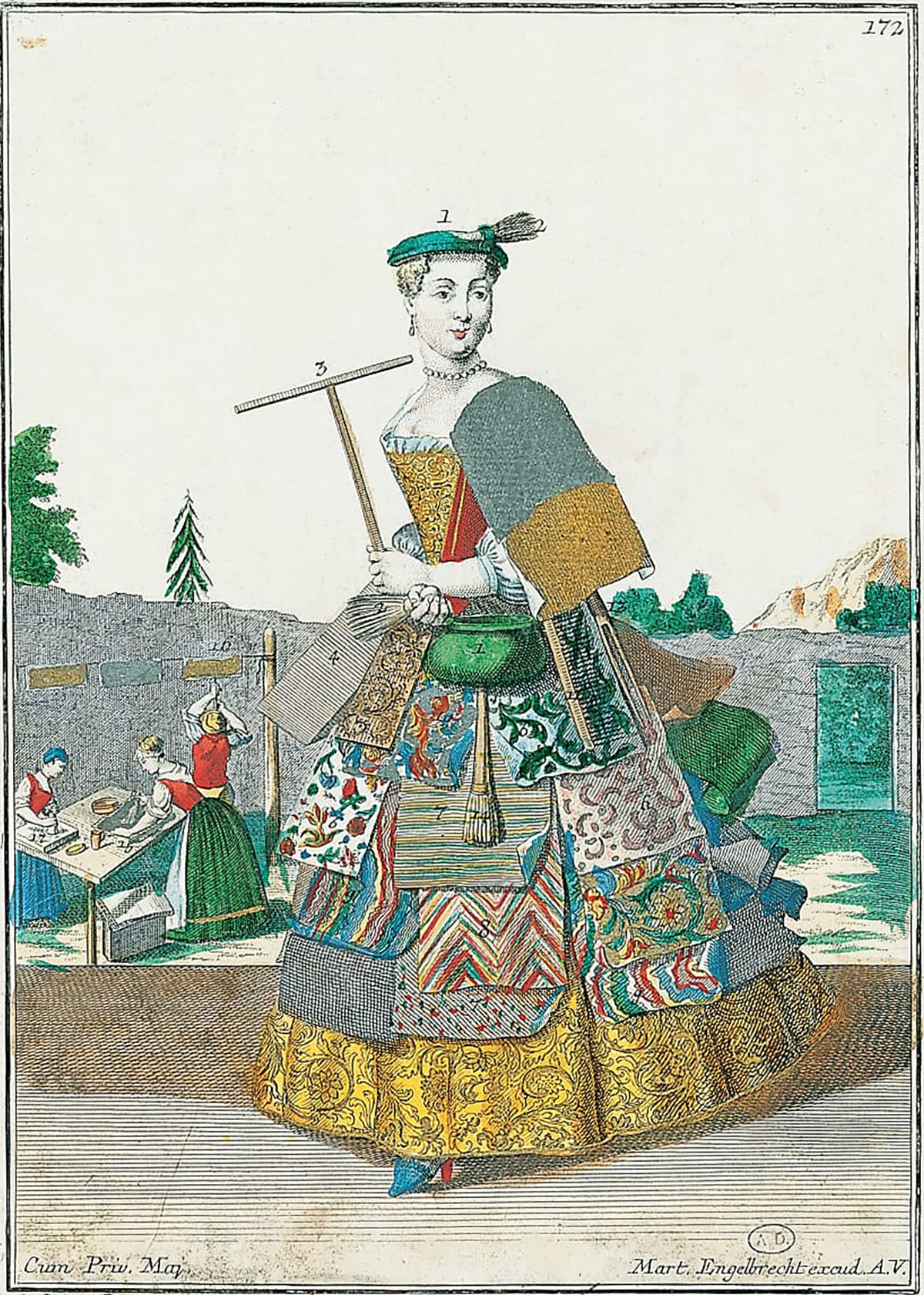
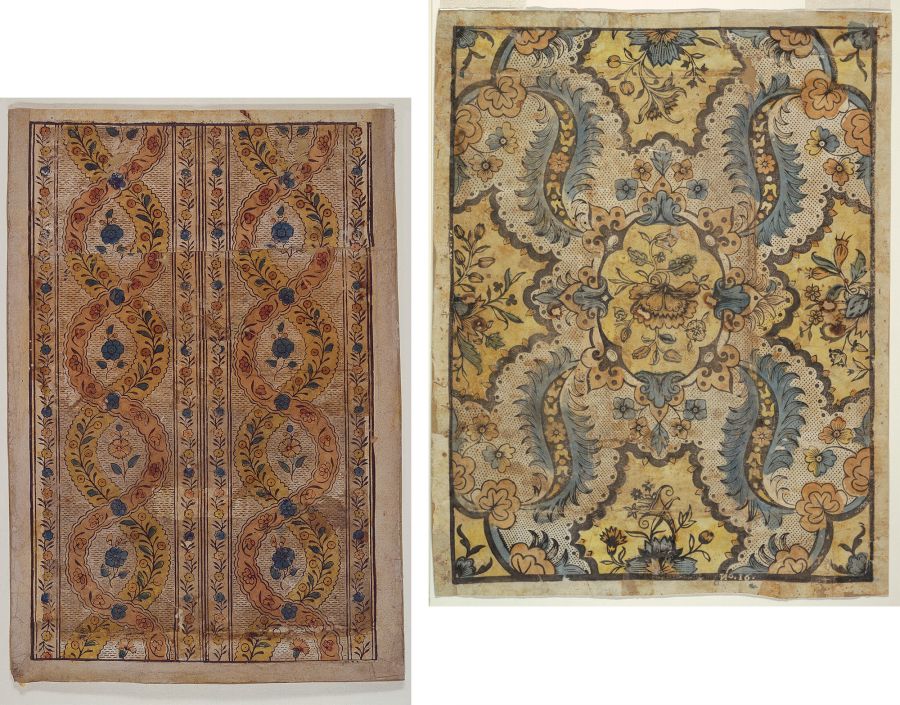
Though widely produced throughout France (Italy, Germany, and the Netherlands had thriving industries, too), the origin of the name “domino” remains a mystery. Could it stem from the hooded cloaks, called dominos, worn at masquerades? Does it come from dominus, the Latin word for “master,” in reference to the master printing block? Do the dotted markings allude to the pips on domino gaming pieces? We may never know. What we do know is that domino papers were so ubiquitous in 18th-century France that Jacques Savary des Brûlons, inspector general to Louis XIV, wrote, “There is not a house in Paris, however grand, that does not contain some example of this charming decoration, even if only in a wardrobe or other private room.”
All that changed in the 19th century, when industrial wallpaper production shuttered the ateliers. Few dominos survive in situ, but those pasted into furnishings—as well as decorative papers collected by bookbinder Olga Hirsch, who gave her collection to the British Museum in 1968, and in books by historian André Jammes and artisan Valérie Hubert—have provided enough inspiration to keep interest going.
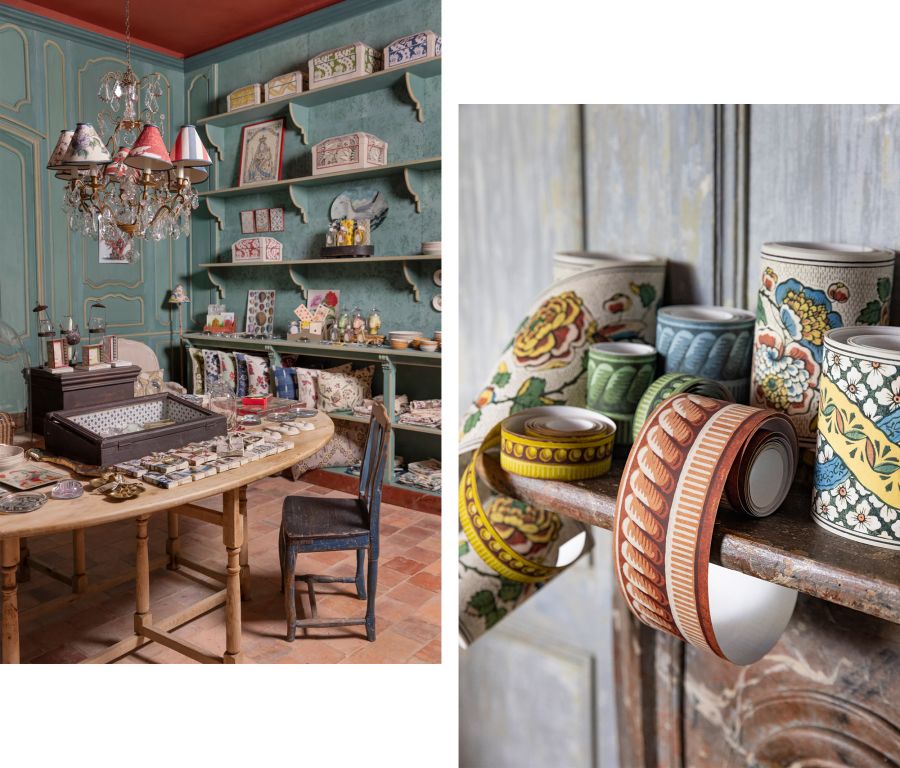
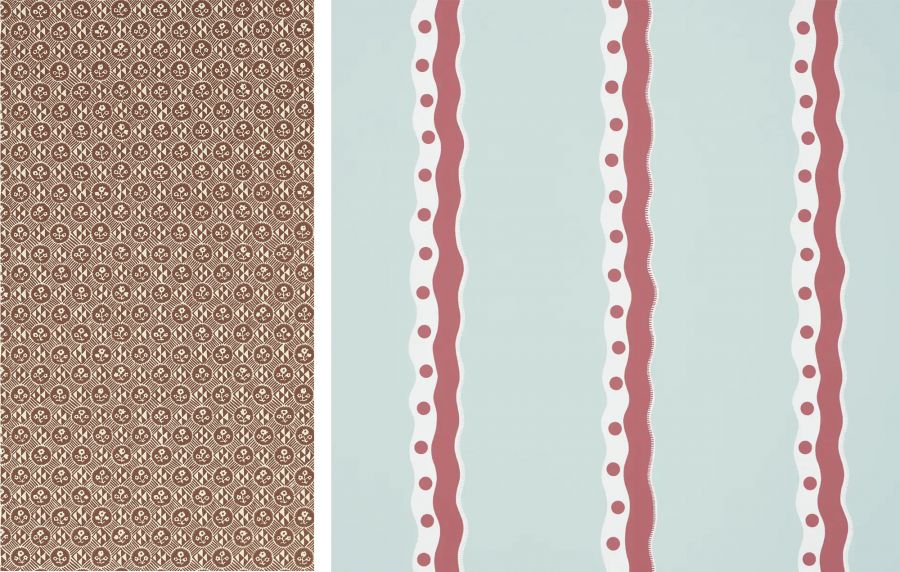
“Domino papers have always appealed to a discerning public, but their current popularity stems from their very modern designs and colors, and the value of handcrafted work,” says Jean-Baptiste Martin, co-founder of Antoinette Poisson in Paris, the premier maker of historical reproductions—a business so successful that the atelier just opened a second location, at 2 Rue Bonapart. “We wanted a street-front shop and to be present on the Left Bank with publishers and antiques dealers,” he adds. A visit this summer will reveal their latest launch: wallpaper borders. “We’ve been collecting 18th-century friezes for years, with the conviction that one day we would use them,” he says.