Journey: 50 Years in the Making

Phillip Jeffries’ craft-forward new collection marks a half century of material beauty for the global company

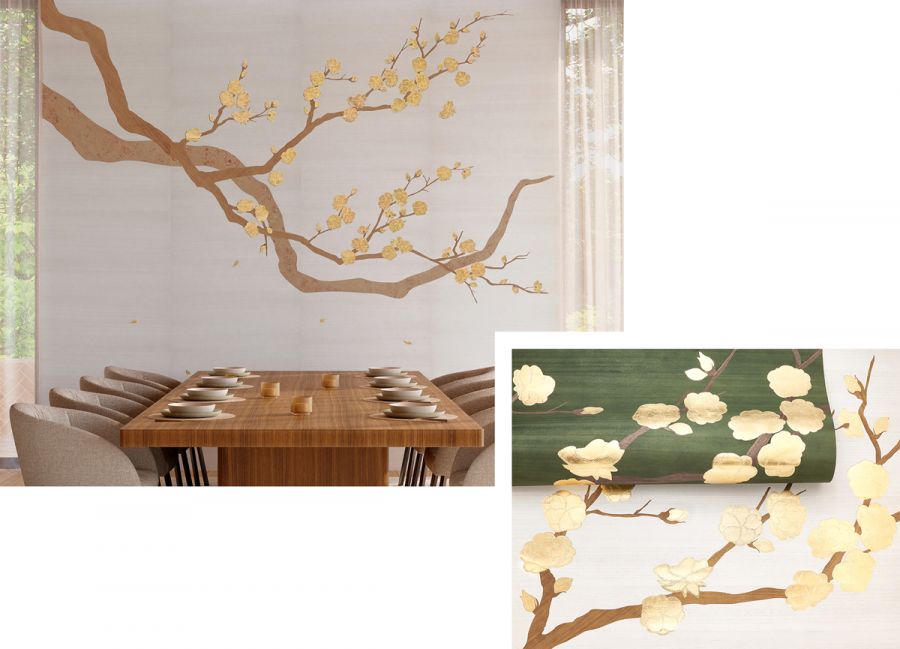
The elegant Hana wallcovering from the new Journey collection by Phillip Jeffries. 

By Anh-Minh Le

Since its founding by Eric Bershad in 1976, Phillip Jeffries has evolved and grown to become one of the world’s leading, and most innovative, wallcovering companies. On the occasion of its 50th anniversary, the house has launched Journey, a collection that is a “a celebration of natural materials” that defines their work. Here, Phillip Jeffries’ President Philip Bershad takes Anh-Minh Le on a tour through the artful new offering. As he and brother Eric Bershad note in the company’s debut monograph, Phillip Jeffries: Walls: Inspiring Design One Wall at a Time,“If you have something that wows people, that moves people, it elevates the brand.”

The company’s new book, Phillip Jeffries Walls: Inspiring Design one Wall at a Time by Philip Bershad and Eric Bershad with Kyle Hoepner (Rizzoli)
Hana

Inspired by cherry blossoms—and rooted in longstanding relationships with Japanese makers—Bershad likens Hana to “art for the wall.” Metallic-leaf florals join with branches composed of thinly cut burl and paulownia woods. According to Bershad, in the early 2010s, Phillip Jeffries acquired the Japanese mill that the company had previously collaborated with for decades. “The mill was initially weaving materials for kimonos, suiting and shoji screens,” he elaborates. “Eventually, they started laminating, including for our wallcoverings. Today, we feel it’s the world’s best finisher, with incredible craftsmanship and attention to detail.” Hana—which is offered in increments of four panels, in four colorways—is the latest example of Japan serving as inspiration for the house: its classic collections include Totally Tatami, which echoes the woven mats traditionally used as flooring, while its Adorn is based on kintsugi, the ancient art of repairing broken ceramics with gold.


Cirque de Soho

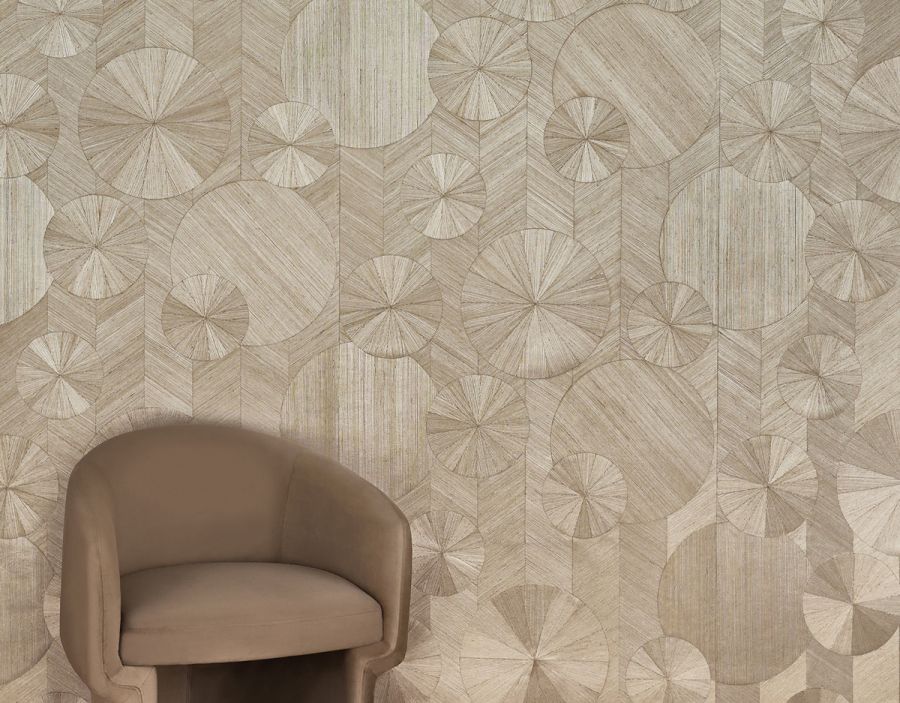
Cirque de Soho broadens Phillip Jeffries’ experimentations merging age-old artistry with cutting-edge technology to striking effect. Or, as stated in Walls, “The company’s consistent goal is to feature a few new ‘wow’ designs and  colors that stop people in their tracks, but also to be seen as a reliable source for timeless favorites.” With its tone-on-tone circles, chevrons and stripes, Cirque de Soho takes a subtle approach to pattern. Handwoven circles are precision cut and repeatedly overlaid onto sisal grasscloth with chevron striping to “create a really special overall look,” Bershad observes. “It can go modern or abstract.” Indeed, the dimensional wall treatment has a sculptural quality to it. Its six colorways range from beige and blue hues to shades of red and chocolate.


Idyllic

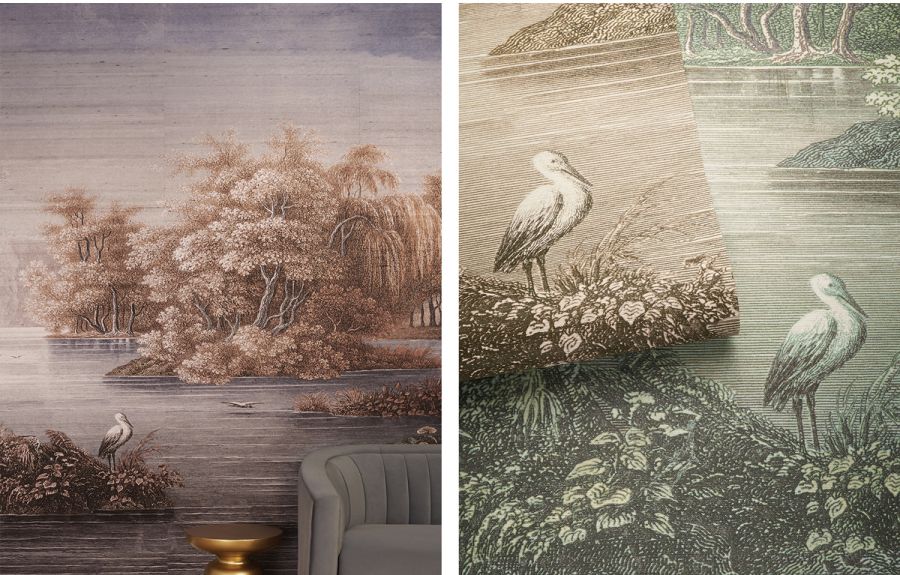
In recent years, Bershad says, Phillip Jeffries has brought on “new designers who are experts at murals and prints.” This, coupled with vice president of design Tara Van Lunen’s diligence in scouring archives and flea markets, has bolstered the company’s luxurious mural wallcoverings that are digitally printed on varying materials. “Over the past seven or eight years, we’ve really perfected the process,” he continues. In the case of the large-scale Idyllic, “the gorgeous landscape is even more elevated” placed on backgrounds like linen and wood. Depicting an intricately-detailed scene of lake, birds, flourishing trees and botanicals, the multi-panel Idyllic is offered in eight tonal colorways—though Bershad notes that digital printing allows for “thousands of hues.” The colors and grounds can be fully customized.


Raffia Atelier

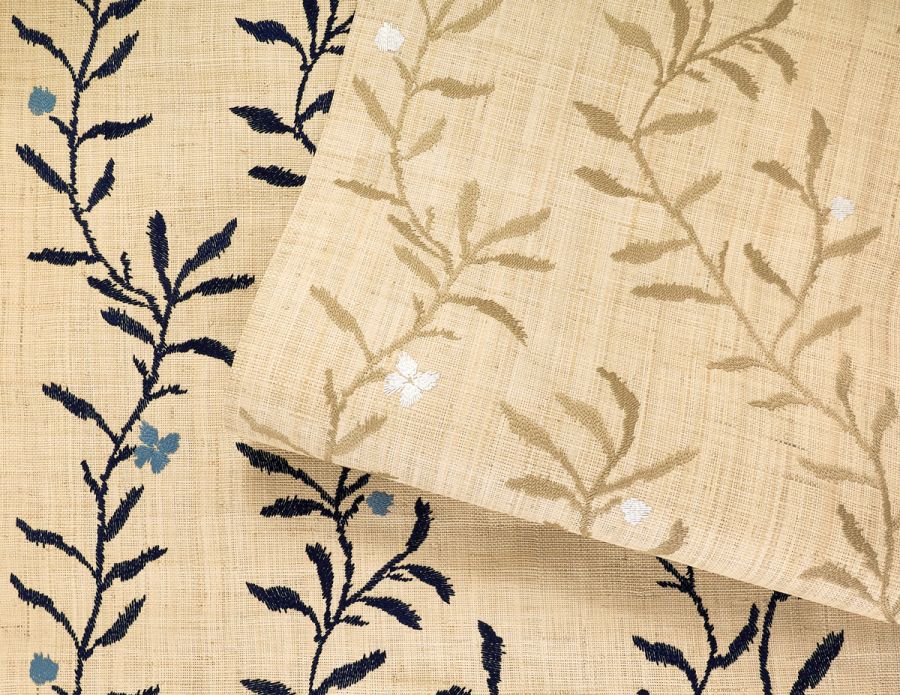
Bershad recalls that over two decades ago—after the birth of his daughter, Ellie, in 2003—Phillip Jeffries introduced Elianna Embroidery, which he describes as “an innovation in embroidering a raffia.” Subsequent collections also combined such elements, like Parasol Stitch, whose radial geometric shapes are embroidered on Manila hemp grasscloth. Now, the newly released Raffia Atelier once again takes the company’s handwoven natural raffia, made by drying palm fronds in the sun, and layers it with exquisite embroidery. “It works with so many different design genres, from very beachy to super-traditional,” says Bershad. The motif is available in five colorways, all on a neutral background of Madagascar raffia. Notes Bershad, “Raffia is a classic that has been used in design since Billy Baldwin’s days.”

Available at the SFDC through Phillip Jeffries

Two Henry Adams Street, Suite 2M-33
San Francisco, CA 94103

© 2022 SAN FRANCISCO DESIGN CENTER  |  TERMS + CONDITIONS  |  PRIVACY POLICY